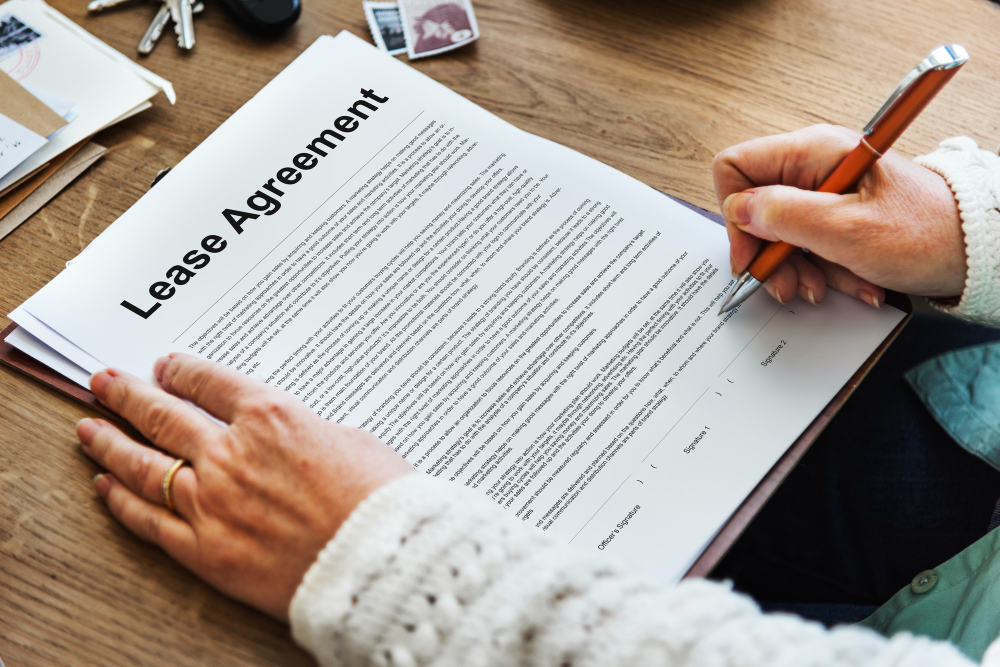

Life doesn’t always follow your lease dates. Maybe you got a new job in another city, your family is growing, or you finally found a home to buy. The problem is that you still have eight months left on your lease.
So, how much does it cost to break a lease? The honest answer is that it depends on your lease and your state. For some renters, it costs nothing. For others, it can mean paying several months of rent.
This guide walks you through the common costs, a simple example of when you may owe nothing, when you usually can’t get out for free, and how to keep the cost as low as possible.
This article is general information, not legal advice. For your exact situation, check your lease and talk to a local attorney or legal aid office.
What Does “Breaking a Lease” Mean?
A lease is a signed agreement to rent a home for a set time, often 12 months. You agree to pay rent for that full time, and the landlord agrees to let you live there.
“Breaking a lease” means moving out and stopping rent before the end date, without the landlord agreeing to let you go.
This is different from a month-to-month rental. A month-to-month rental has no end date. Either side can end it by giving proper notice, so you’re not really “breaking” anything as long as you give that notice.
How Much Does It Cost to Break a Lease?
There’s no single national price. What you owe depends on what your lease says and how quickly the home is rented again. Here are the most common costs:
| Cost | What it means | How much |
|---|---|---|
| Early termination fee | A set fee in some leases that lets you leave early | Often about 1 to 2 months of rent, but some leases set more |
| Rent until a new tenant moves in | You may keep owing rent until the home is rented again | Depends on how fast it rents |
| Re-renting costs | Reasonable costs to advertise and show the home | Varies |
| Security deposit deductions | Unpaid rent, damage beyond normal wear, or cleaning | Up to your deposit, and more if the damage costs more |
| Unpaid bills | Utilities or other fees you owe under the lease | Varies |
An early termination fee is sometimes called a “lease break fee” or a “buyout.” It’s a fixed amount written into the lease. You pay it, you give the notice the lease asks for, and you can leave without owing the rest of the rent.
If your lease doesn’t have this kind of clause, the landlord usually charges you for their actual losses instead. That mostly means rent for the months the home sits empty, plus reasonable costs to find a new tenant.
A Simple Example
Let’s say your rent is $1,500 a month and you have 6 months left on your lease. (These numbers are only an example.)
- No early termination clause: In the worst case, you could owe all 6 months, which is $9,000. But if the landlord finds a new tenant after 1 month, you’d likely owe about $1,500 plus reasonable advertising costs.
- A clause with a 2-month fee: You’d pay $3,000, give the required notice, and you’re done.
As you can see, the same move can cost very different amounts depending on your lease and how quickly the home rents.
What Affects the Cost?
- Time left on the lease: Two months left usually costs less than ten.
- How much notice you give: More notice gives the landlord time to find someone new, so the home sits empty for less time.
- Time of year: In many areas, rentals move faster in some seasons than in others.
- How easy the home is to rent: A fairly priced, clean home in a good location rents faster.
- What your lease says: Look for sections called “early termination,” “default,” or “subletting.”
Does the Landlord Have to Re-Rent the Home?
In many states, yes. This is called the duty to mitigate. In simple words, it means the landlord must make a fair effort to rent the home again instead of leaving it empty and charging you for every month.
For example, if you move out in March and the landlord finds a new tenant who starts in April, you usually wouldn’t owe rent after April. The rules are different in each state. We explain the Montana rule below.
When You May Be Able to Break a Lease Without Paying
1. Military Service
A federal law called the SCRA (Servicemembers Civil Relief Act) protects service members in every state. You can end a lease early if:
- You get PCS orders, which are official orders to move to a new base, or
- You’re deployed for 90 days or more, or
- You entered active duty after signing the lease.
You need to give your landlord written notice along with a copy of your orders. For leases with monthly rent, the lease ends 30 days after your next rent payment is due.
2. The Home Isn’t Safe or Livable
Landlords must keep a rental safe to live in. If there’s a serious problem, like no heat, no running water or a health hazard, and the landlord doesn’t fix it after written notice, state law may let you end the lease. Keep photos, dates, and copies of every letter or message.
3. The Landlord Breaks the Rules
If a landlord keeps entering without proper notice, shuts off your utilities, or locks you out, state law may give you the right to leave. The exact rules depend on your state.
4. Domestic Violence, Sexual Assault, or Stalking
Many states have special laws that let survivors end a lease early. Not every state has one, though. Please check your state’s rules or contact your local legal aid office.
When You Usually Can’t Break a Lease Without Paying
You can always choose to move out. But in these situations, you’ll usually still owe money under your lease:
- Personal life changes: A new job, buying a home, moving in with a partner, or going back to school are good reasons to move, but on their own they usually don’t cancel a lease.
- Money trouble: Losing income is hard, but it usually isn’t a legal reason to stop paying. Talk to your landlord early, since many will work out a plan.
- You don’t like the home or the area: Noisy neighbors, a long commute, or wanting a bigger place usually don’t count.
- You caused the problem: If you or your guests caused the damage, you usually can’t use it as a reason to leave. You may also have to pay for the repair.
- You never gave the landlord a chance to fix it: Most repair-related exits require written notice and time for the landlord to act first. Simply moving out without notice can leave you owing rent.
- You sublet without permission: Handing your home to someone else without the landlord’s approval can break your lease even more and add to what you owe.
- Your military move doesn’t qualify: The SCRA covers specific situations, like PCS orders or a deployment of 90 days or more. A move that doesn’t meet those rules may not be protected.
- You planned to use your deposit as the last month’s rent: Don’t assume this is allowed. Your deposit is there to cover unpaid rent and damage after you leave, so ask your landlord in writing before counting on it.
How to Lower the Cost of Breaking Your Lease
- Read your lease first: Find the early termination, notice, and subletting sections.
- Talk to your landlord early: An honest, early conversation often leads to a better deal. Follow up in writing.
- Give as much notice as you can: More time means a better chance the home rents quickly.
- Offer to help find a new tenant: Share the listing, suggest people you know, and keep the home ready for showings.
- Ask about subletting or assigning the lease: Subletting means someone else lives there and pays you, while you stay on the lease. Assigning means a new person takes over the lease completely. Most landlords need to approve both in writing.
- Offer a buyout or payment plan: Some landlords will accept a fixed amount to end things cleanly.
- Leave the home clean and in good shape: Take photos and videos on move-out day. It helps to walk through the same kind of rental inspection checklist your landlord will use.
- Keep everything in writing: Save emails, texts, and any agreement you both sign.
Does Breaking a Lease Hurt Your Credit?
Breaking a lease doesn’t show up on your credit report by itself. The trouble starts if you leave unpaid rent or fees behind. If the landlord sends that balance to a collection agency, it can be reported to the credit bureaus and may stay on your report for up to seven years.
It can also affect where you rent next. Many landlords check rental history during tenant screening, so leaving on good terms really helps.
A Quick Note for Landlords
- Put a clear early termination clause in your lease so everyone knows the cost upfront.
- Make real efforts to re-rent the home, and keep records of your ads and showings.
- Charge only actual, reasonable costs, and send an itemized deposit list on time.
Local Update: Breaking a Lease in Montana
If you rent or own a rental in Kalispell, Whitefish, Columbia Falls or elsewhere in the Flathead Valley, here are the Montana rules to know:
- The landlord must try to re-rent: Under Montana law (MCA 70-24-426), if a tenant leaves, the landlord must make “reasonable efforts” to rent the home at a fair rent. The old lease ends when the new tenancy starts. If the landlord doesn’t try, the lease is treated as ended when the landlord learns the tenant left.
- Subletting needs written approval: A tenant who moves out can’t sublet or hand over the home without the landlord’s written consent (MCA 70-24-305).
- Repairs can allow an early exit: If the landlord doesn’t fix a problem that affects health and safety, the tenant can give written notice. If it isn’t fixed within 14 days, the lease can end at least 30 days after the landlord gets the notice. In an emergency, the landlord has 3 working days. This doesn’t apply if the tenant caused the problem (MCA 70-24-406).
- Month-to-month rentals: Either side can end the rental with at least 30 days’ written notice (MCA 70-24-441).
- Security deposits: The landlord has 30 days to send a written list of any charges. If there’s no damage, no cleaning needed, and nothing owed, the deposit must be returned within 10 days (MCA 70-25-202).
- What changed in 2025: A new law (HB 444) updated Montana’s deposit rules:
- Tenants now get 24 hours to finish required cleaning after written notice, unless the lease has already ended.
- Landlords can refund deposits by electronic transfer, cash, check, or other methods.
- Landlords can leave a notice at the home and let the tenant know by email, phone, or text.
- Domestic violence: Montana’s Residential Landlord and Tenant Act doesn’t include a special early-exit rule for survivors. If this affects you, Montana Legal Services Association offers free legal help.
To learn more about your rights on both sides, read our guides to Montana landlord tenant law and what a landlord cannot do in Montana.
Frequently Asked Questions
Is breaking a lease expensive?
It can be, but it doesn’t have to be. With an early termination clause, you’ll know the cost upfront. Without one, the cost depends on how quickly the home is rented again.
What happens if you break a lease?
You may owe a fee or rent until a new tenant moves in, plus any damage or cleaning costs. If you don’t pay, the debt could go to collections.
Can I break my lease early without a penalty?
Sometimes. Military orders, unsafe living conditions, and serious landlord violations may allow it. Otherwise, you’ll likely need to pay or reach a deal with your landlord.
Can a landlord keep my whole deposit if I break my lease?
A landlord can use the deposit for unpaid rent, damage, and cleaning but must send an itemized list. In Montana, that list is due within 30 days.
How much notice should I give?
Follow what your lease says. If your lease doesn’t say, more notice is always better, since it gives the landlord time to find a new tenant.
The Bottom Line
The cost to break a lease can be anything from nothing to several months of rent. Read your lease, talk to your landlord early, put everything in writing, and know your state’s rules. Those simple steps can save you a lot of money and stress.
For owners, a clear lease and quick re-renting protect both sides. If you’d rather not handle tenant move-outs, re-renting, and deposits on your own, it may be worth hiring a property manager.